Author: Cindy
-

Wave Heart
The Great Highway The San Francisco Recreation and Park Department is sponsoring a temporary series of murals and sculptures along the Upper Great Highway. Once Proposition K was passed to permanently close the 2.5-mile stretch of road between Lincoln Way and Sloat Boulevard to automobile traffic, the gist of a large park has begun…
-
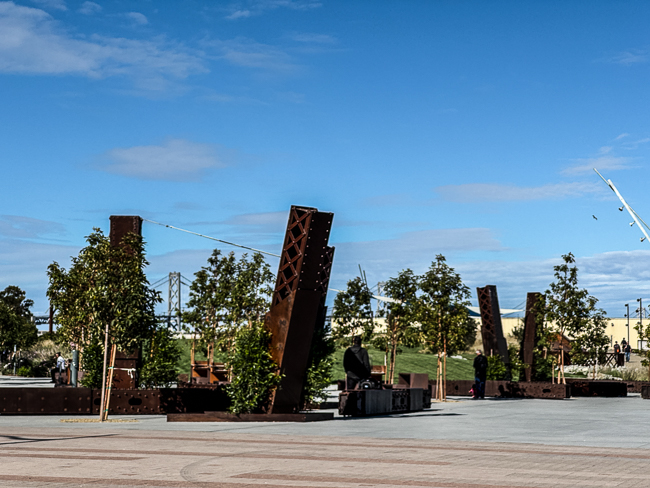
Bay Front Park
The eastern side of Terry A. Francois Boulevard between Warriors Way and 16th Street SurfaceDesign has created a small oasis of calm on property owned and managed by the Port of San Francisco. According to SurfaceDesign, the park has been designed to incorporate sea level rise, which is a precedent for parks in the country.…
-
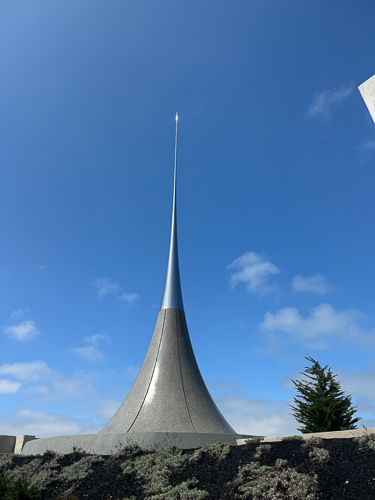
Point of Infinity
66324 Yerba Buena Road – The Westernmost peak of Yerba Buena Island The sculpture’s full title is “Point of Infinity: Surface of Revolution with Constant Negative Curvature.” It evokes the “Tower of the Sun” sculpture of the 1939 fair, sits at the top of Yerba Buena Island, and has rather spectacular views of San Francisco…
-
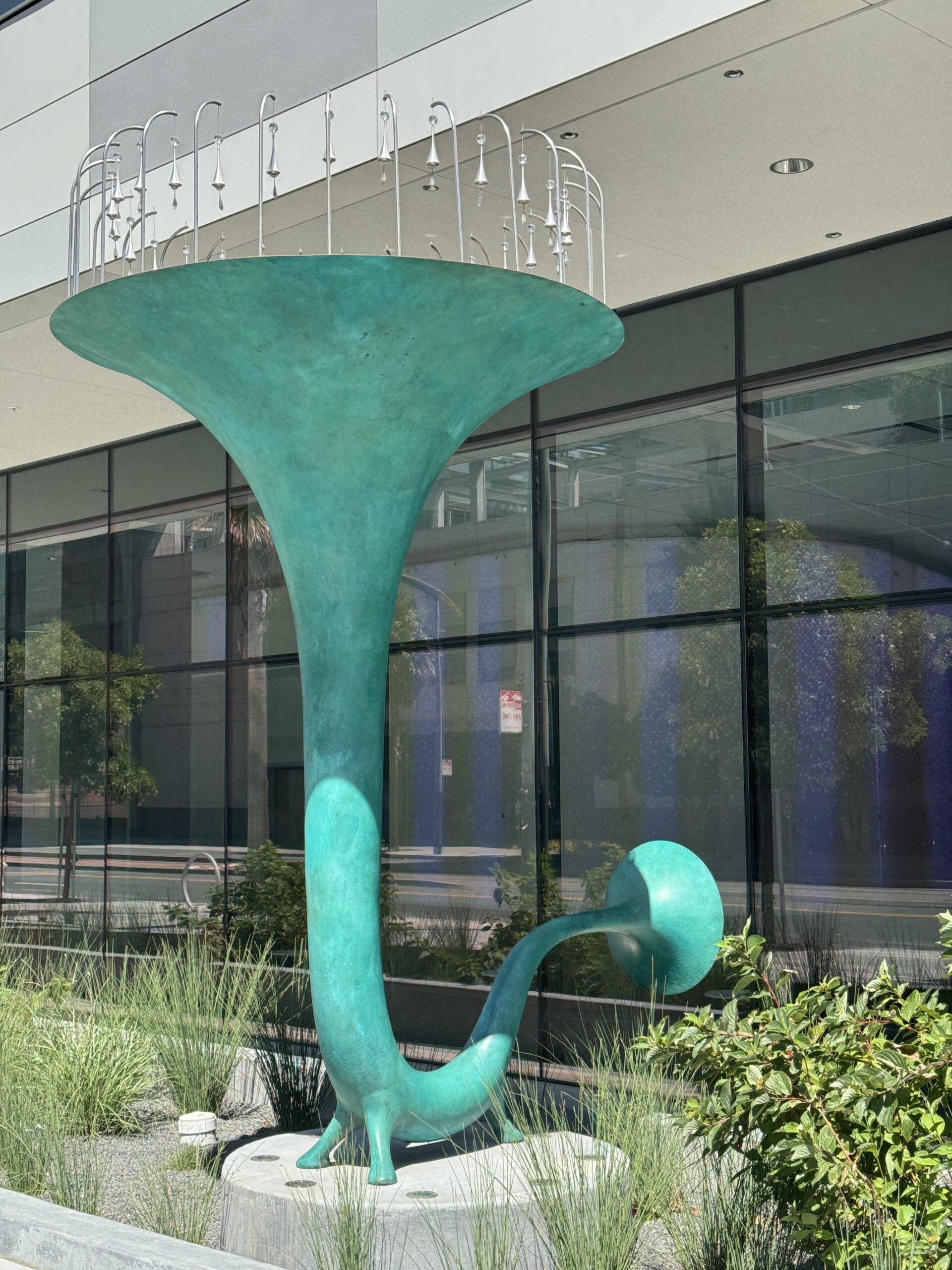
Skyhorn
On 3rd Street between 16th and Mariposa According to the artist’s website, Skyhorn is an engaging bronze sculpture that is a wayfinding landmark within a large UCSF medical campus. This monumental, interactive sound sculpture draws our attention to the sky and what lies beyond, serving as a poetic metaphor that invites pause and reflection. Cast…
-
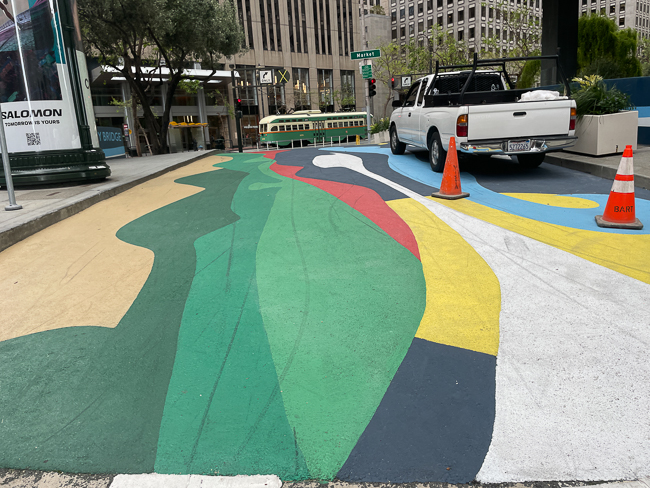
Estero en Movimiento by Claudio Talavera-Ballón
Battery Bridge Between Bush and Market This street mural is by Peruvian-born, San Francisco artist Claudio Talavera-Ballón. Talavera-Ballón’s inspiration for his 1,900-square-foot mural is Point Reyes’ Drakes estuary. “I want to celebrate the nature that surrounds us here in the Bay Area, also in hopes the mural can serve as a reminder to protect the…
-
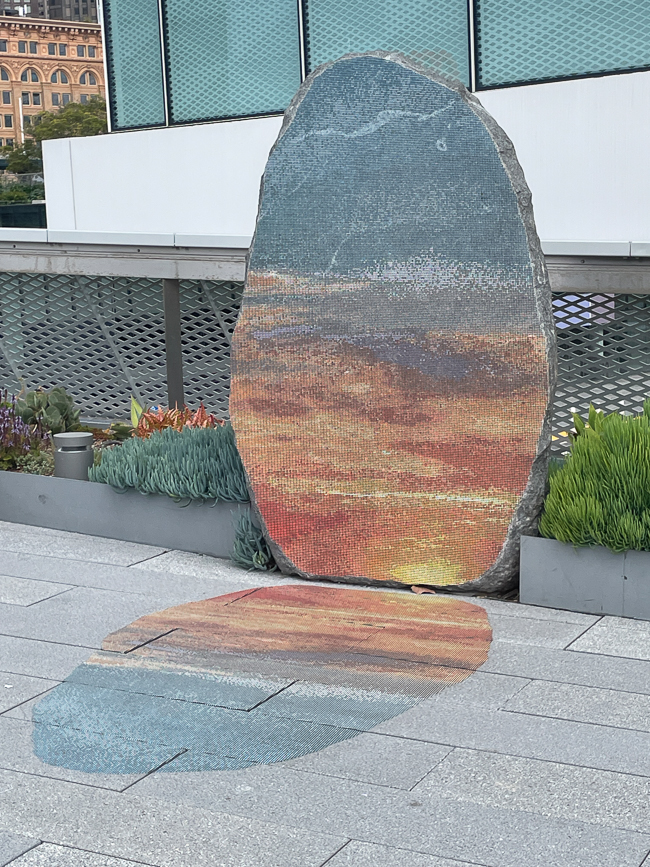
Double Horizon by Sarah Sze
Yerba Buena Center Bridge Double Horizon is a 5,500-pound boulder split open like a geode. The split sculpture is embedded with tiles to create pixelated color images of the sky at different times of the day. Sze was born in Boston in 1969 and lives in New York. She received a BA in Architecture and…
-
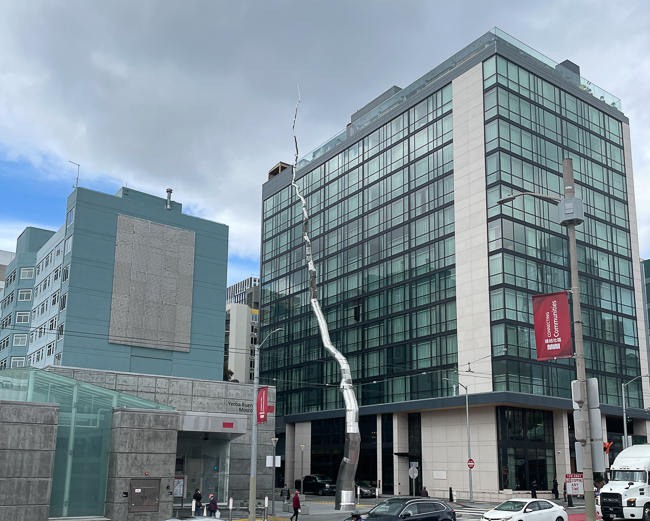
Node by Roxy Paine
Yerba Buena/Moscone Muni Station Node is by New York artist Roxy Paine. Paine describes the eight-ton sculpture as an “enormous bio-industrial rhizomatic organism” and “an elegant line connecting earth to sky, people to underground systems and sculpture to city.” I have been a huge fan of Roxy Paine’s and have seen many of his sculptures…
-
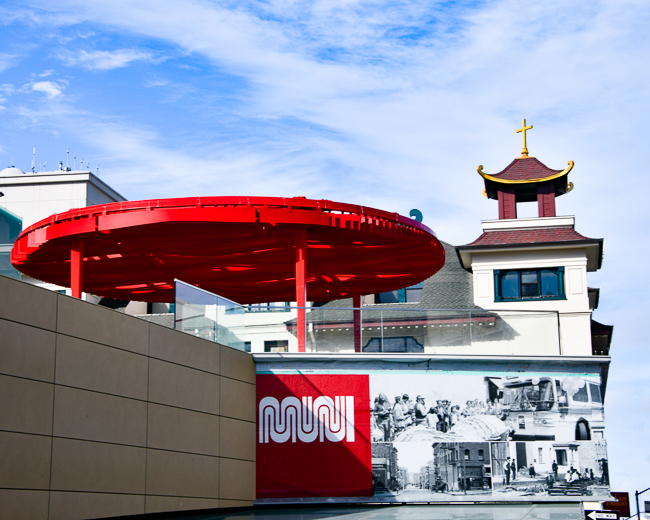
Roof Top Plaza
Atop the Chinatown Metro Station There is a small parklet above the Chinatown Metro station. It has lovely views out into the area, as well as serving as a nice respite from the hustle and bustle of the neighborhood. The Chinatown station was designed by Kwan Henmi, now DLR Group, including the rooftop patio,
-
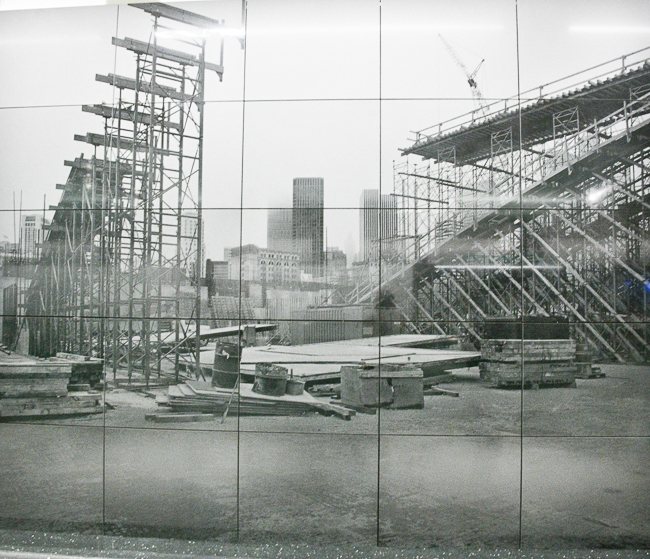
Arc Cycle
Folsom Street / Moscone Center Metro Wagner’s installation uses six photos from her 1978-84 series “Moscone Center” The photos documented the excavation and building process of Moscone Center. The photos were laser-etched onto a 14-by-26-foot pane of glass. The works show the rebar and early construction forms of the convention center rising in what was…
-
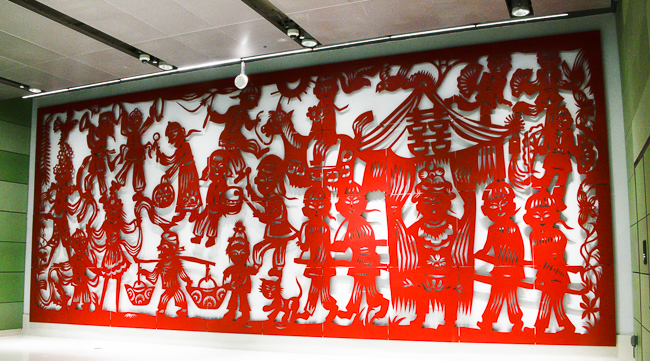
Dance by Yumei You
Chinatown Metro station These two metal screen sculptures are massive translations of Yumei Hou’s paper-cutting practice, executed in stainless steel using a laser and painted a vibrant red. “Yangge: Dance of the Bride” and “Yangge: Dance of the New Year” both take their names from the Yangge (Rice Sprout Song) folk dance from the northern…
-
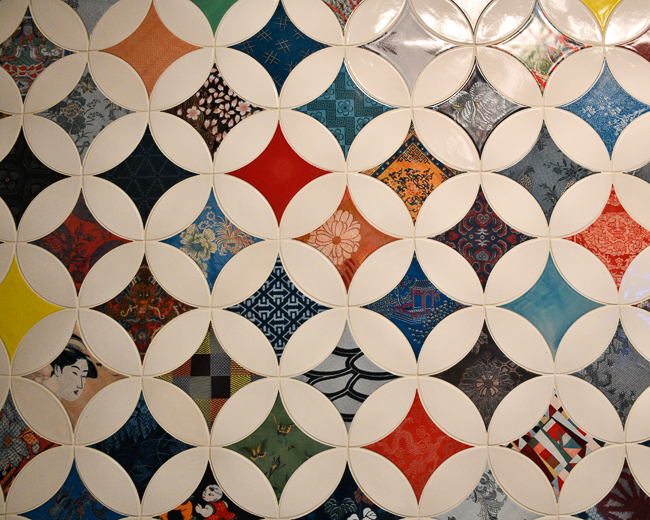
A Sense of Community
Chinatown Metro Station This arched ceramic tile mural (14 feet high by 35 feet wide) is one of my favorites of the new BART station art installations. Embedded in this colorful array of tiles are small tiles meant to evoke the cultural exchange of the ancient Silk Road trade route where different fabrics, patterns, and ideas…
-
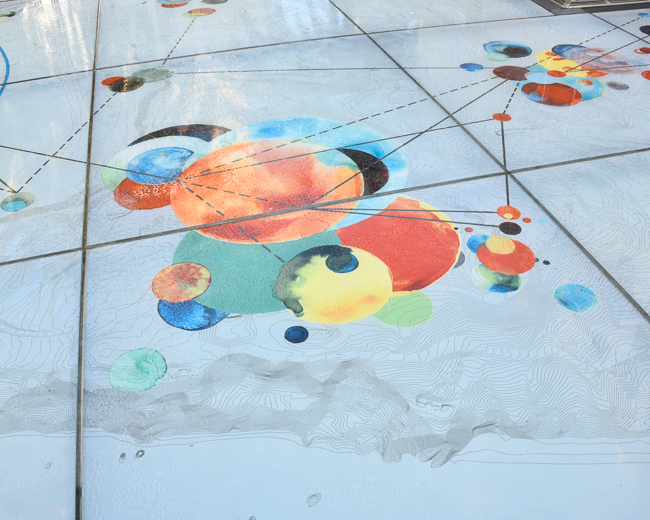
Convergence: Commute Patterns
Union Square BART Station The painted glasswork can be seen both inside and outside the station and spans the facade, roof deck, and the ceiling of the entrance on Geary. The base images of “Convergence: Commute Patterns” are a blue topographic map of the city with circles in different colors painted on top of the…
-
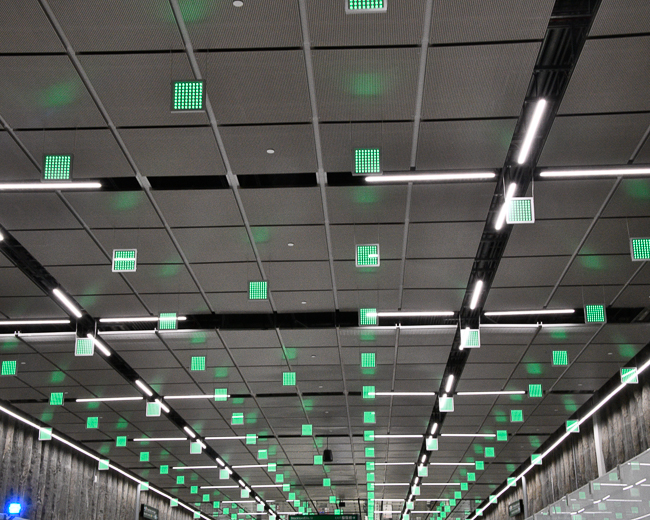
Lucy In The Sky
Union Square Muni Station This immersive work by Erwin Redl consists of more than 500 translucent 10-by-10-inch light panels that each contain an array of LED lights spanning the color spectrum. They are suspended from the ceiling along the entire length of the 670-foot concourse level. The panels are programmed to change color and create patterns,…
-
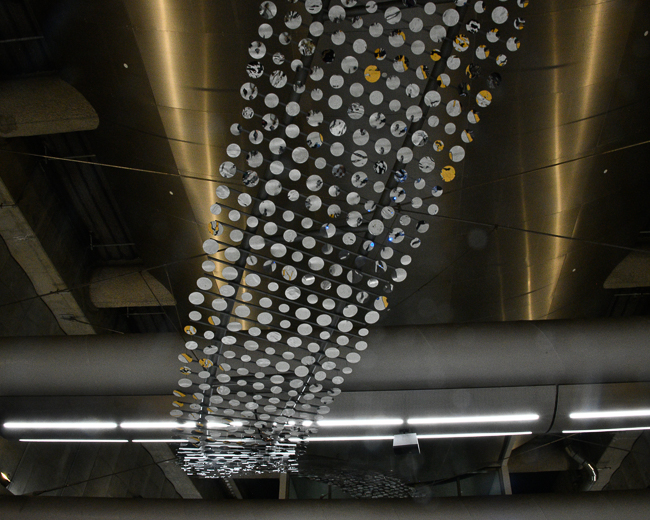
Silent Stream
Silent Stream can be found at the Union Square Muni station. Meant to evoke an underground creek “Silent Stream” consists of 12,000 highly polished stainless-steel disks of varying sizes; it measures 250 feet in length with widths that vary from 4 feet to 8 feet. Originally from Chicago, San Francisco based Jim Campbell is an…
-
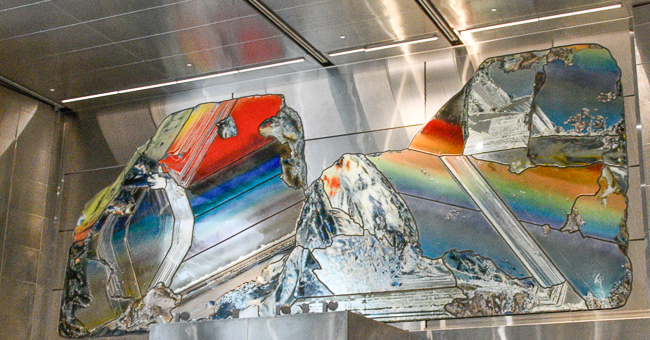
Face C/Z
Yerba Buena / Moscone Center Muni Station This piece, found at the Yerba Buena/Moscone Center Muni station is by Leslie Shows, a Los Angeles-based artist whose mixed-media works incorporate assemblage, painting, drawing, glass, and sculptural relief. Her work has been exhibited at institutions including the San Francisco Museum of Modern Art, the Berkeley Art Museum,…
-
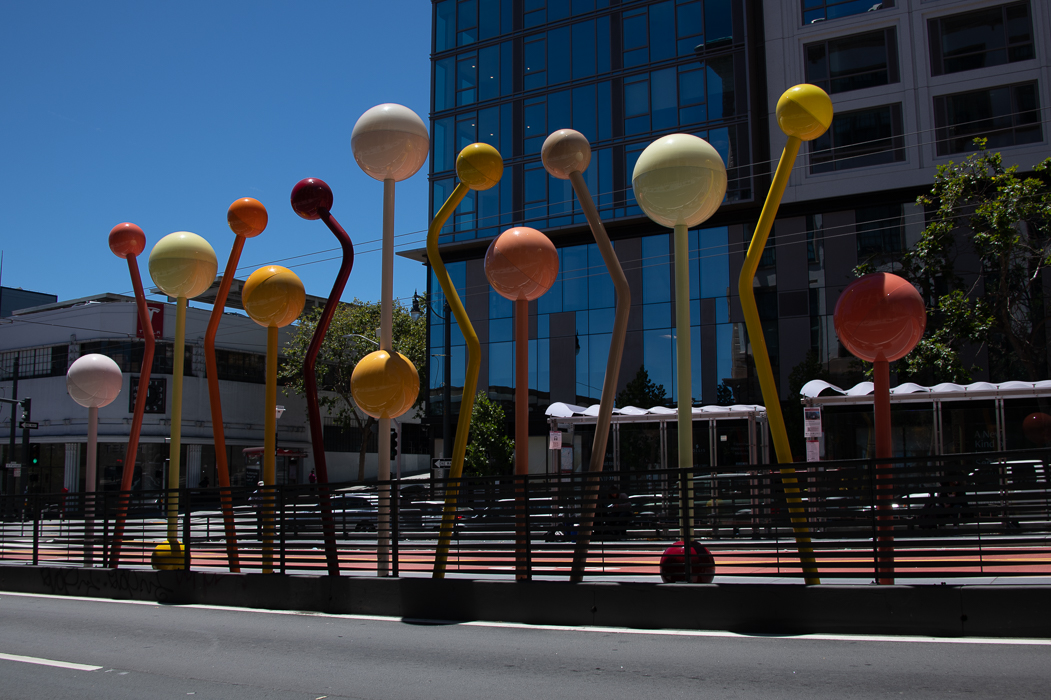
Van Ness Improvement Project Art Work
August 2022 Van Ness Avenue Between Geary and O’Farrell These two sculptures were part of the Van Ness Avenue Improvement Project and are by Jorge Pardo. Cuban-born, Jorge Pardo is an internationally acclaimed contemporary artist whose work explores the intersections of painting, sculpture, design, and architecture. This untitled work consists of 13 steel figures that reach…
-
Little Puffer
San Francisco Zoo At the area between Grizzly Gulch and The South American Area Little Puffer is believed to have been built by the Cagney Brothers’ Miniature Railroad Company around 1904. Herbert Fleishhacker purchased the train in 1925 and installed it at the new Herbert Fleishhacker Zoo, where it remained for 53 years. The history of Little…
-
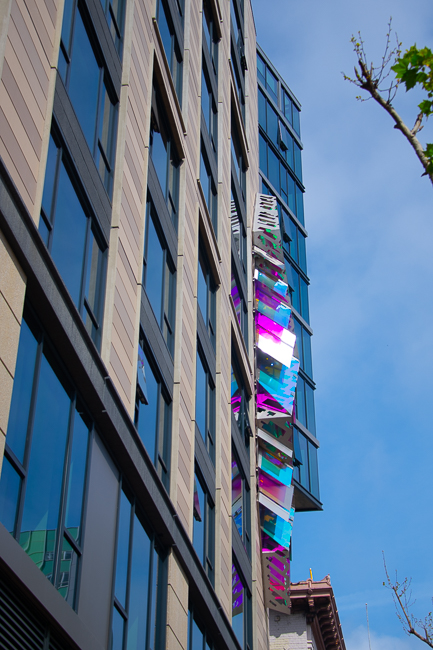
Infinite Reflections
March 2022 1028 Market Street Titled Infinite Reflections, the piece consists of sequentially arranged dichroic glass and polished steel panels. The stainless steel mirrors the landscape, and the glass filters the light and changes its colors “The plan is for people to be able to see the urban environment around them, but reflected and filtered through…
-
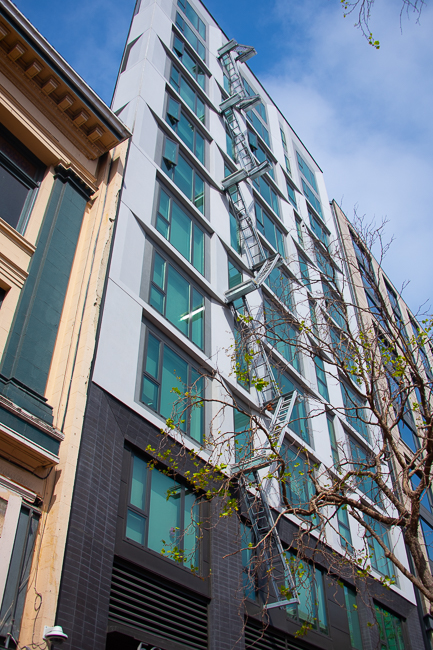
The Ladder (Sun or Moon)
March 2020 1066 Market Street The Ladder (Sun or Moon), is a ten-storied neon and steel ‘ladder,’ resembling a functional fire escape. The piece was created by Iván Navarro. Born in Santiago, Chile, Navarro obtained his BA in Fine Arts from the University of Chile in Santiago, Chile “I believe that art must be…
-
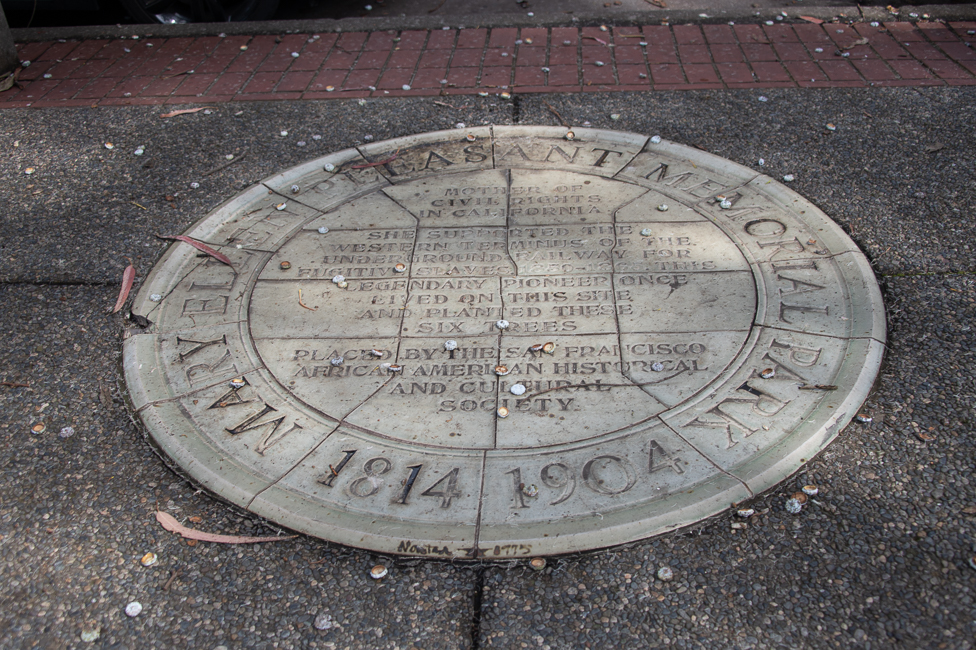
Mary Pleasant Memorial Park
March 2022 Near the corner of Bush and Octavia Streets The Plaque Reads MARY ELLEN PLEASANT MEMORIAL PARK MOTHER OF CIVIL RIGHTS IN CALIFORNIA SHE SUPPORTED THE WESTERN TERMINUS OF THE UNDERGROUND RAILWAY FOR FUGITIVE SLAVES 1850-1865. THIS LEGENDARY PIONEER ONCE LIVED ON THIS SITE AND PLANTED THESE SIX TREES PLACE BY THE SAN FRANCISCO AFRICAN…
-
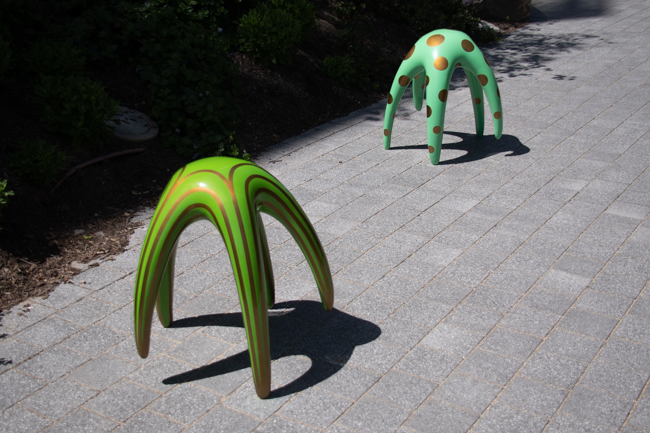
Holographic Entities Reminding of the Universe
May 2021 Pierpoint Lane between Third Street and Bridgeview Way – San Francisco Artists Statement: Consisting of nine artworks, this installation reflects my interest in ancestral traditions and folklore that speak to the interrelatedness of all beings, animate and inanimate, in the universe. The sculptures are inspired by shapeshifters: ever-evolving entities that continue to reinvent…
-
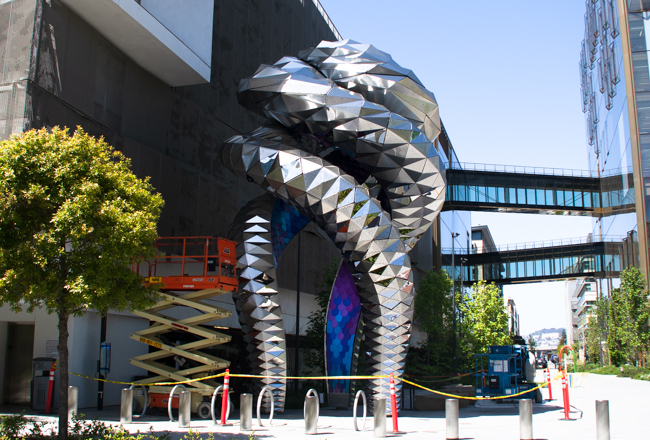
Orbital
May 2021 Pierpoint Lane between Third Street and Bridgeview Way Artists Jason Kelly Johnson and Nataly Gattegno – Studio Futureforms Artists Statement: Orbital is a contemporary garden folly, exploring geometric and material exuberance it evokes organic forms found in nature, but also giant robots and futuristic space vehicles. The structure is composed of three coiled legs…
-
Rolling Reflection
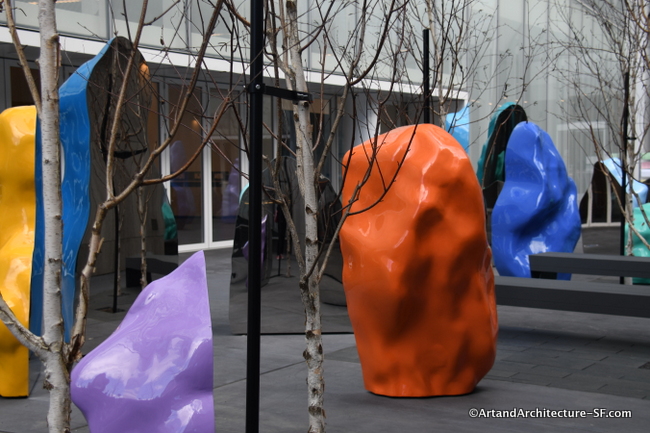
February 2021 1500 Mission Street This piece sits in what the project calls the forum, it is by Sanaz Maninani. Sanaz Mazinani is an artist and educator based between San Francisco and Toronto. Mazinani works across the disciplines of photography, social sculpture, and large-scale multimedia installations, Mazinani holds an undergraduate degree from Ontario College of…
-
1500 Mission Street
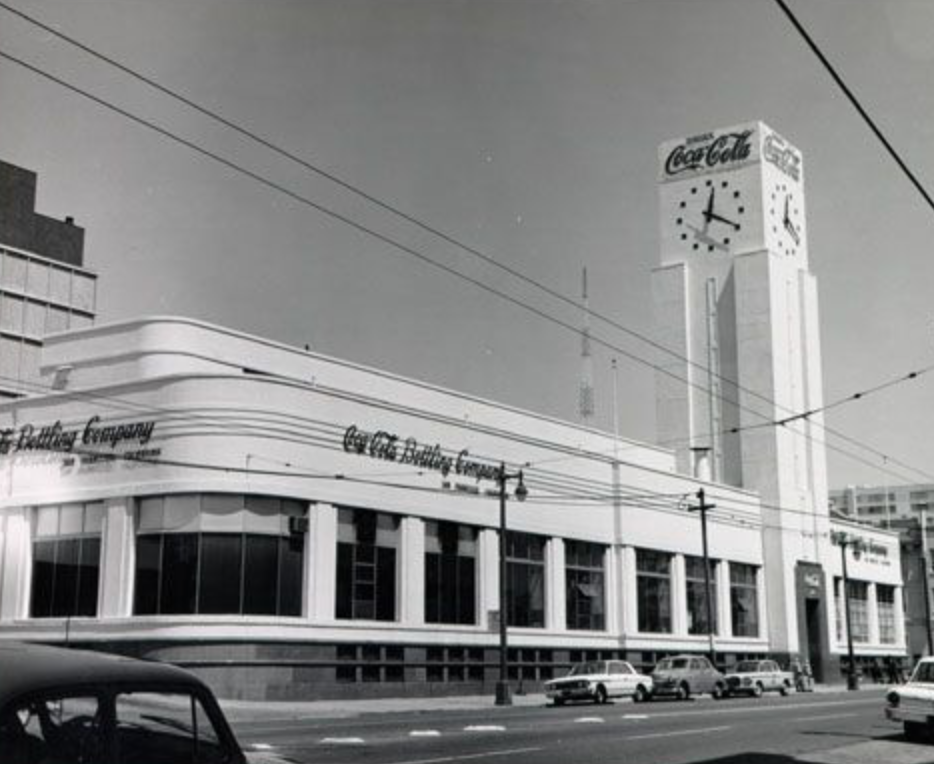
February 2021 This is what is left of several buildings that once sat on this site. Built in 1925, 1500 Mission was a one-story reinforced concrete industrial building originally designed in the Classical Revival style for the White Motor Company. The White Motor Company was created out of the White Sewing Machine Company. Founded by…
-
Refrain by Walter Hood
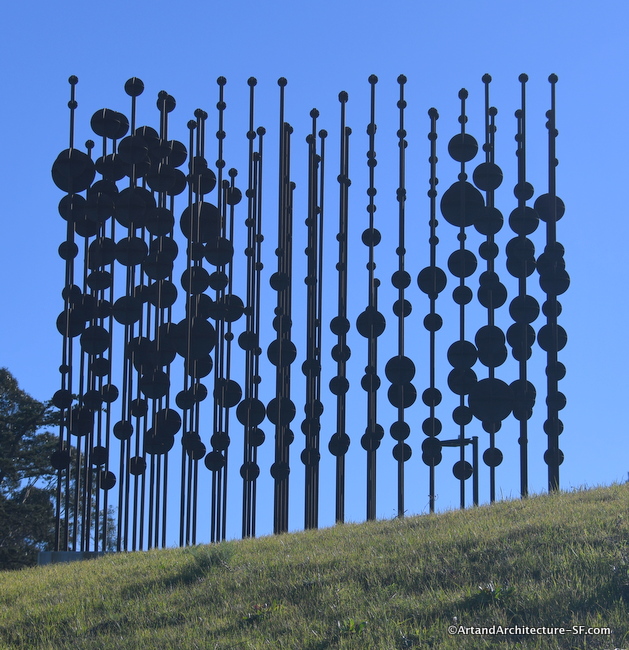
February 2021 Hunter’s Point/ Bayview Refrain was produced in 2015 and is made of steel. Walter Hood is the creative director and founder of Hood Design Studio in Oakland, California. He is also a professor at the University of California, Berkeley, and lectures on professional and theoretical projects nationally and internationally. He is a recipient…
-
Frame by Mildred Howard
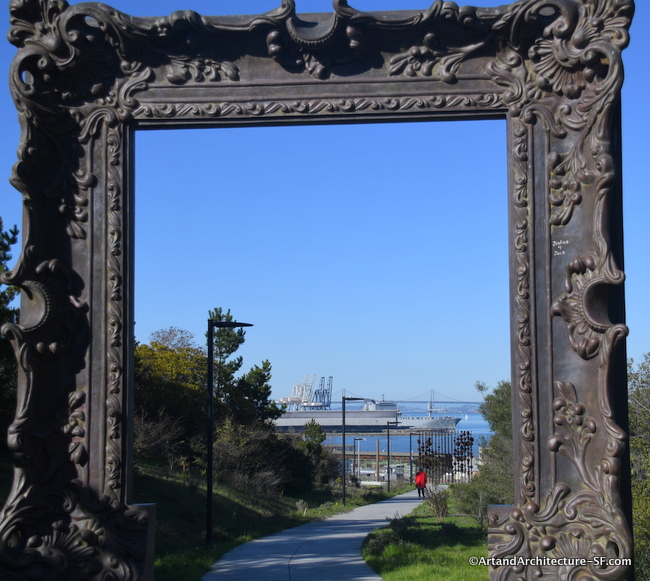
February 2021 Bay View / Hunter’s Point Frame is an enlarged version of an antique Rococo style frame. Howard’s frame is at the scale of the natural world around it, between 15-20 feet high. The use of the frame is no longer intended to frame a single small work of art, it frames the multiple…
-
Stream of Consciousness
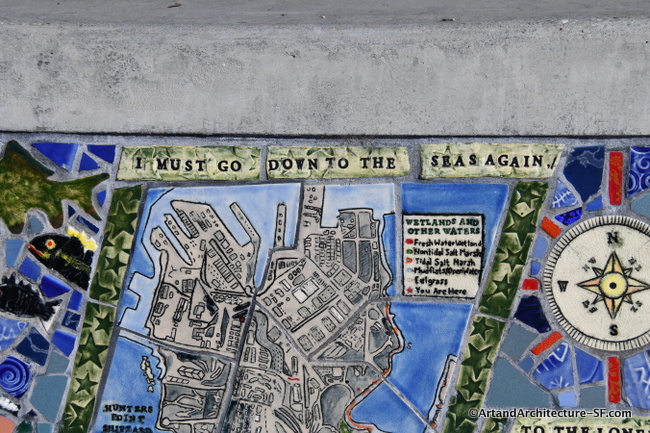
February 2021 Bayview / Hunters Point Hillpoint Park – Picnic Area Innes Court Stream of Consciousness is a 120 foot long ribbon of historic, contemporary, and scientific images interspersed with literary quotes. The tiles tell the story of water from the depths of the sea to the constellations in the sky. The images were made…
-
Floating Points
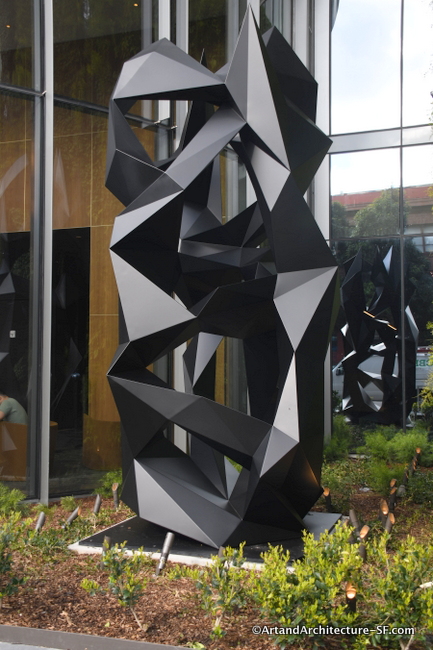
February 2021 1500 Mission Street Shannon Finley, a Berlin- based artist, created this piece that stands by the front door to 1500 Mission, between the glass facade and a 30 foot green wall. It stands 15-foot high and is made of stainless steel, powder-coated matte black. Comprised of multiple planes set at various angles, the…
-
Prevailing Winds
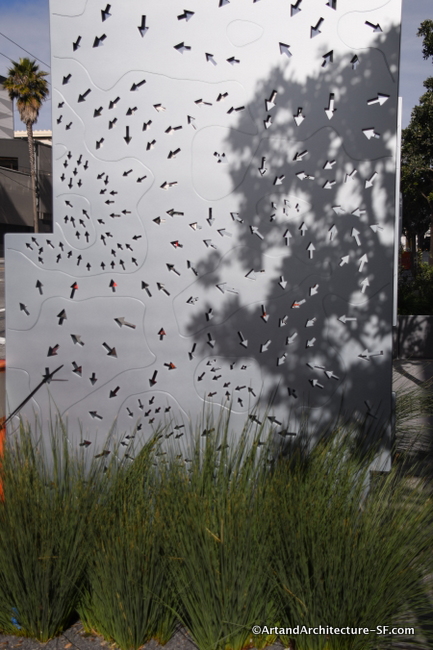
February 2021 1500 Mission Street “Prevailing Winds” by artist Catherine Wagner . Catherine is a San Francisco-based artist, known best for her conceptual photography. Wagner’s work often involves extensive research and, in this instance, she studied Bay Area wind patterns and then laser cut the resulting cartographic data onto eight aluminum panels. Lining the South…
-
Haig Patigian’s Creation at the GGIE
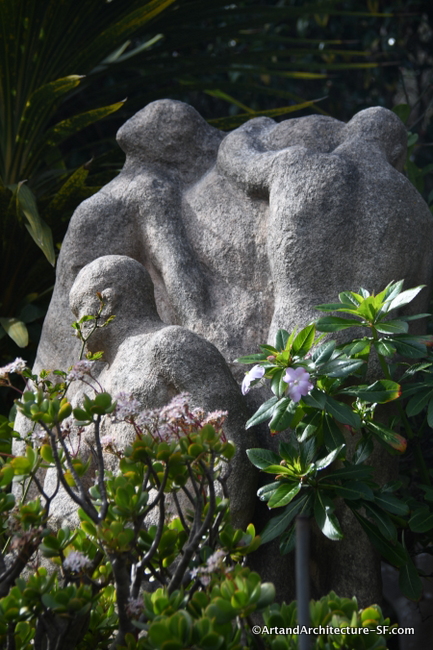
February 3, 2021 300 Filbert / Filbert Steps Haig Patigian is represented on this site with many of his works. Patigian (1876-1950) was born in the city of Van in the Ottoman Empire. His parents were teachers at the American Mission School in Armenia. He was largely self-taught as a sculptor.Patigian spent most of his…